Neuraminidase (NA, EC 3.2.1.18) is a type of glycoside hydrolase enzyme present in many organisms. It cleaves sialic acid residues from glycoproteins and glycolipids. This action is essential for many biological processes. It plays a critical role in viral replication and cellular processes, particularly in influenza virus infection. Therefore, viruses are often classified by neuraminidase subtypes, such as N1, N2, etc. Neuraminidase is related to neurodegenerative disease, such as Alzheimer’s disease, and Parkinson’s disease.
The Neuraminidase Activity Fluorometric Assay provides a simple, accurate, and sensitive method for monitoring neuraminidase activity in biological samples. In this assay, neuraminidase cleaves a non-fluorescent substrate to release a fluorescent product, which can be measured at an excitation wavelength of 365 nm and an emission wavelength of 445 nm.
Applications
Neuraminidase activity in biological samples.
Infuenza virus antigen titration.
Key Features
Simplicity: The assay directly detects enzymatic activity without complex enzyme coupling steps.
Sensitivity: Even low levels of neuraminidase activity can be detected due to the high fluorescence intensity.
Kit Contents for 100 Assays
Component
Part Size
Substrate (50X)
120 µL
Standard (1 mM)
50 µL
Positive control (12X)
10 µL
Stop Reagent
12 mL
Assay Buffer
15 mL
Storage and Shipment Conditions
The kit is shipped on ice and should be stored at -20°C.
Typical Data
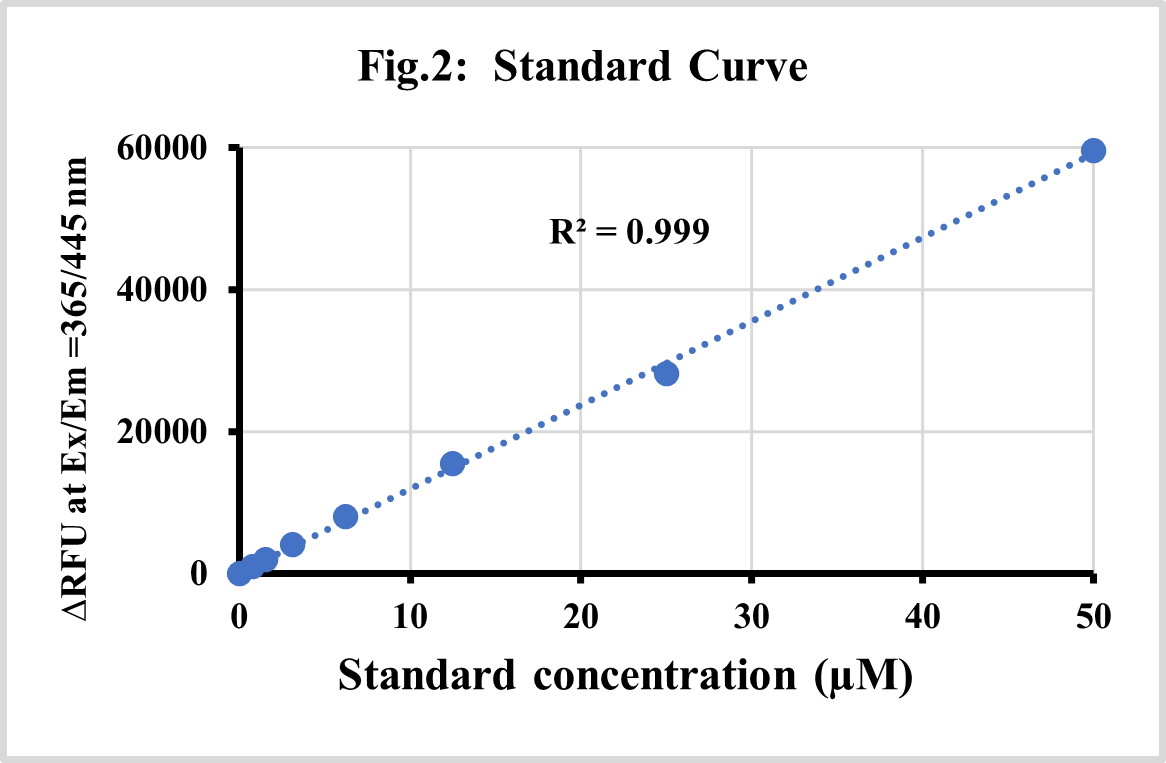
Standard curve: This standard curve in Fig 2 is provided as a reference demonstration. A standard curve should be generated for each set of samples assayed.
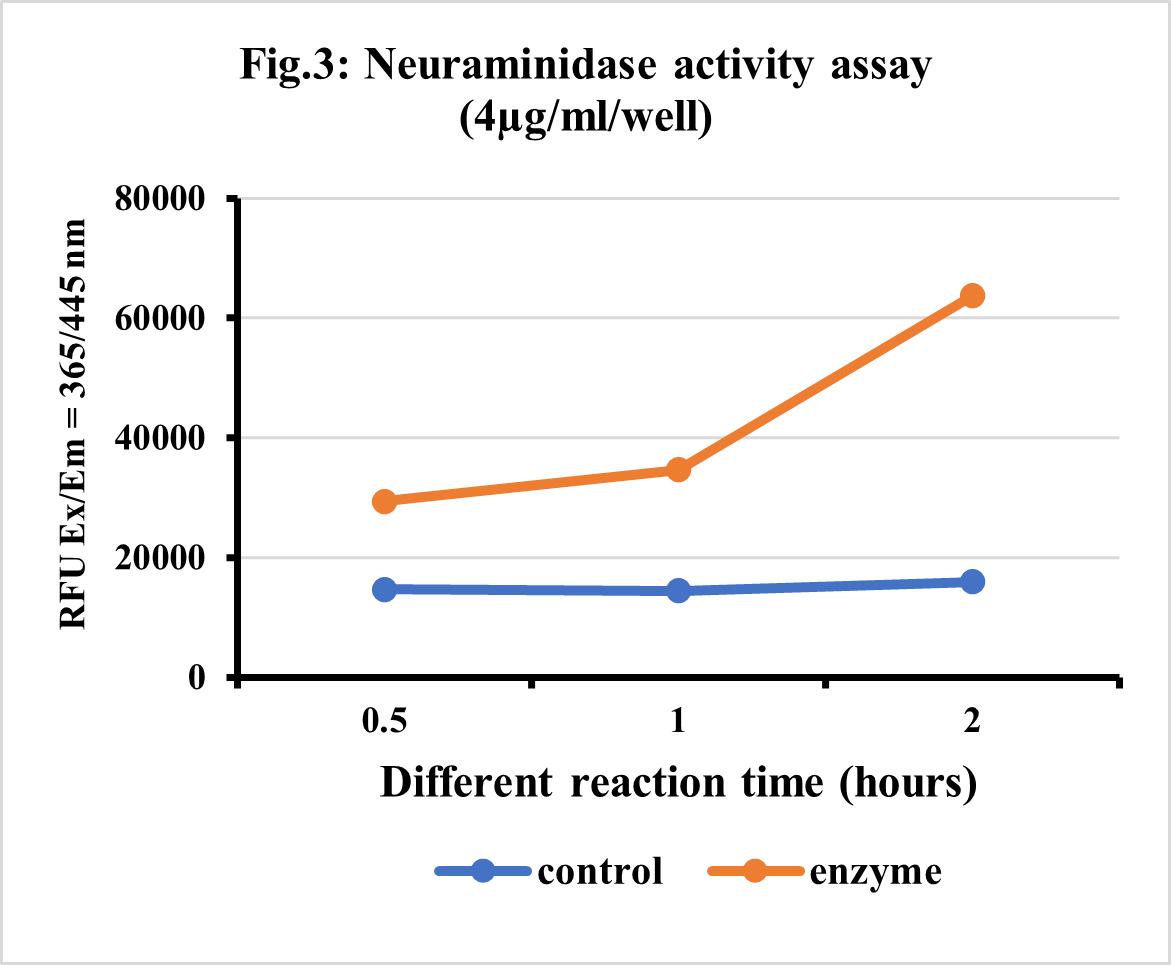
Fig.3 displays the NA enzyme activity analyzed at different time points of incubation at 37℃.